
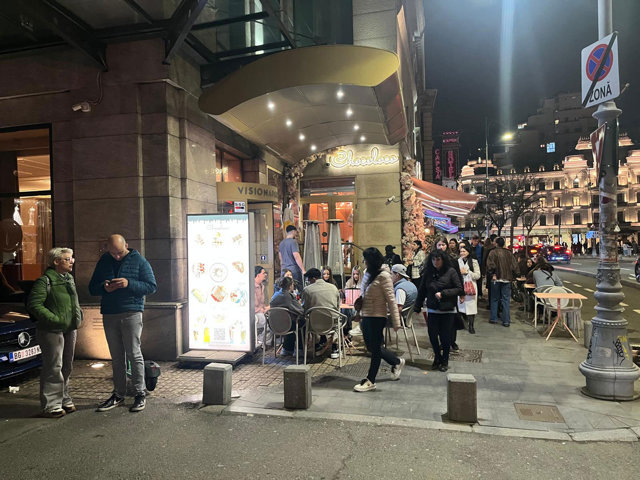
When the statistical data will come, we will see that the first quarter of this year was bad from an economic point of view, from a business point of view: sales decreased, which means that receipts also decreased, consumption decreased rapidly, beyond forecasts, due to the decrease in purchasing power, i.e. wage growth was extremely low (3%), failing to cover price increases, i.e. inflation of 9% year on year, investments were weak, in especially the private ones, and the number of jobs started to decrease. Felix Patrășcanu, one of the owners of Fan Courier, the largest courier on the market, said last week that it is «the worst start of the year in our entire 27-year history. It doesn't resemble anything that has been, we went for many years on consumption, as an economy, and at the moment things have gone down a bit, it is a turning point.» What Felix Pătrăşcanu did not say is that Fan Courier also started restructuring, to reduce the number of people, because the business decreased, the e-commerce market reduced its growth. eMag, the largest online retailer, announced a few days ago that it is restructuring its team and cutting 3% of its positions due to a difficult macroeconomic context and external competition. Fan Courier and eMag are not the only companies that started to restructure their operations due to the decrease in business, decrease in orders, decrease in consumption. In the banks, a cold wind of reductions is felt and heard for market reasons, for reasons of digitization, automation and AI. A few days ago, one of the most read news on zf.ro was related to the restructuring that Oracle is doing in American and global operations, 18,000 employees being put on the restructuring list. Considering this, the more than 3,000 employees in Romania also started to feel a chill down their spine, considering that it is only a matter of time until it reaches the Romanian market. And the IT workers are more and more serious about where to go (of course they won't go to get their unemployment benefits), where to find another open position, where to quickly send their CV before others. The IT market is no longer as generous as it was a few years ago, and if you want to find something you have to lower your salary expectations. Companies and big banks around the world, including Romania, reported big profits for the past year, but they are still under pressure to operate restructuring. Profit has little to do with restructuring decisions made at the top, as I wrote in another opinion. We will hear more and more companies that will restructure, including in Romania, under the pressure of the reduction in economic growth, under the pressure of the recession that is setting in everywhere in the Romanian economy, under the pressure of wars and geopolitical crises. We have moved from geopolitics to geoeconomics, with all the effects that we see around us and that we are about to feel on our own skin. As I said before, we are in recession, but we are not in crisis yet. But if they want, those in power now can send Romania overnight into a political, economic, financial, social crisis. The world feels more and more price increases, inflation, in conditions where wages are no longer increasing and there are no great hopes that they will increase. The increase in gasoline and diesel prices due to the war in Iran amplifies even more the state of nervousness and uncertainty regarding the future. From a macroeconomic point of view, as long as there is no break in the visible indicators – exchange rate, interest in lei, other tax increases -, which are the most watched, the world still does not perceive the crisis. As long as the leu/euro exchange rate is stable, and it is extremely stable these weeks – for example, at the exchange offices in Bucharest, the rate was quoted on Sunday at 5.06 lei/euro for purchase/5.09 lei/euro for sale – even below the rate from the BNR, the public does not have the perception related to the crisis, especially since interest rates on lei are quite stable. The Ministry of Finance continues to pay high interest on Fidelis and Tezaur government bonds, over 7%, which gives a state of some stability. The rating agencies, the last one being S&P, maintained the rating granted to Romania, which gives the government a breather until the next evaluation. But if we wake up with a political crisis, things can go crazy immediately, primarily in the financial markets. Romania's public debt has reached an extremely high level and it continuously needs money to finance the budget deficit and refinance debts that are due. The BNR can control the leu/euro exchange rate, but I doubt that it can control 100 percent the euro interest rates and even the lei interest rates at which the government and the country borrow. On the opposite pole, despite the recession that is gaining ground, Calea Victoriei in Bucharest continues to be full on weekends, and customers are not sitting at tables and standing with a merdenea, a coffee and a still water with lemon, but there are even glasses of wine or prosecco. At MAYFAIR 39 and P+1, the most popular bistros on Calea Victoriei, it was full, and the corporate world felt good, far from wars and recession. There is a certain resistance and resilience to economic and business changes, but let's see how long it will last, if things don't improve, because things can get worse overnight.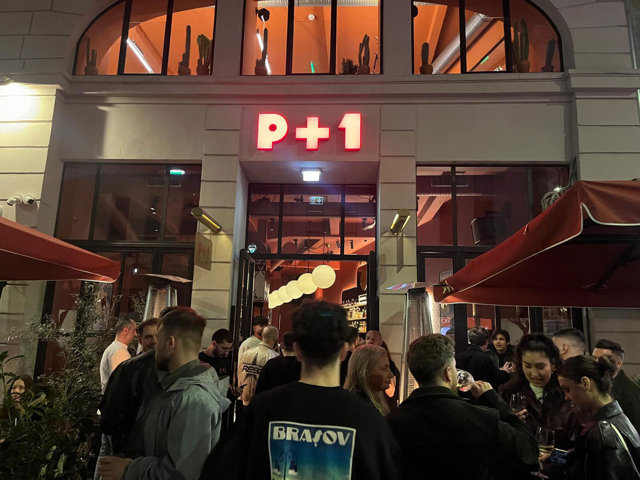


For other news, analyses, articles and business information in real time, follow NV on WhatsApp Channels