
♦ Pluria, a Romanian start-up founded in 2020 by Andrei Creţu and Gabriela Drăghia, offers companies access to over 1,000 coworking spaces and work cafes in 150 cities in 20 countries. In 2025, revenues increased 2.3 times, and the average ticket per customer almost tripled. The company recently closed a $2 million seed round with Sparking Capital and Crescendo Ventures ♦ Latin America has become Pluria’s center of gravity – Colombia, Mexico and Argentina generate approximately 80% of the business. The most diverse customer used 63 different cities in a single year. With the new round, the company wants to double the business in 12-18 months, launch a self-serve product for smaller teams and open the Brazilian market.
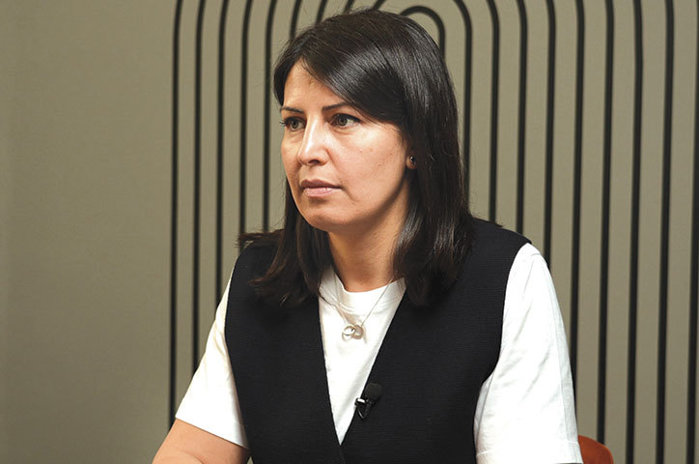
Pluria, «an Airbnb of workspaces» – a B2B platform that gives companies access to a network of over 1,000 coworking spaces and work cafes in 20 countries, has closed a $2 million seed round led by Sparking Capital, with the participation of Crescendo Ventures, and plans to double its business in the next 12-18 months. The total investment attracted by the company exceeds 6 million dollars. «Revenues matter the most, so I’ll start by sharing our growth, which was 2.3X for total revenues globally. But what warmed us even more was the fact that we had customers who increased the intensity of using services with us and this was reflected in the fact that we managed to almost triple the average ticket», said Gabriela Drăghia, co-founder and CRO of Pluria, during the ZF IT show Generation. She did not communicate an absolute revenue figure – only the growth multiplier. The financing round supports three strategic directions, explained Gabriela Drăghia. The first is the development of a collaboration analysis module between teams, which the company calls «intelligent collaboration» – a layer of data and artificial intelligence that gives companies an X-ray of how colleagues interact between departments and formulates recommendations for the future. «We can provide the company with a very good x-ray of the way colleagues collaborate, of the style of human interaction between departments, between people from different areas. And here we will add an artificial intelligence component to be able to help not only analyze the status quo, but also formulate some impactful recommendations for the future», said Drăghia. The second direction is the launch of a self-serve product for teams smaller than 50 employees – the current minimum threshold from which a company can access Pluria’s services. The new product will work with direct card payment, without human interaction, and is planned for launch no later than the third quarter of 2026. The third direction is the expansion in Brazil, arising as a demand from the existing portfolio of clients who have employees in that country. «It doesn’t mean that we are necessarily taking aggressive steps towards opening Brazil, but we have a request from the existing client portfolio to open the network for the users they have there as well», Drăghia explained. Pluria’s center of gravity has moved to Latin America, where Colombia, Mexico and Argentina generate approximately 80% of the business. The change happened in less than two years. Romania continues to grow, but LATAM is a larger and more generous geography in terms of demand, Drăghia explained. Drăghia explains the reorientation through a structural similarity between the two regions: companies in the IT sector with employees able to work from anywhere, but which have a social component to be seen periodically. «Our launch on the Romanian market helped us understand a lot the dynamics in Latin America,» said Drăghia. Co-founder Andrei Creţu is temporarily relocated to Latin America to support business development. Gabriela Drăghia signals a change in the conversation with client companies. «Two, three years ago, most clients gave us the same answer: «I have distributed teams, people work remotely and are happy just working from home», she says. «In the last 6-12 months we see that the discussion has changed. Now it’s more about the intentionality of meetings between people.» It is not about the obligation to return to the office, but about a meeting frequency justified by a project, a product launch or a clear objective. Drăghia gives the example of some companies that meet without laptops – only with notebooks and phones – as a deliberate format of reconnection. «Once a month we meet without any kind of devices, just to talk to each other and whatever idea we have, we write it down in a notebook», explained the clients. Another observed pattern is the combination of coworking spaces with work cafes on the same day: employees work from the coworking in the morning, go to the cafe for lunch, continue their conversations and return to the coworking. «The two worlds intertwine», says Drăghia. On the space offer segment from space owners, Pluria observes a trend of growth of coworking spaces, not contraction – contrary to the expectations generated by the «back to office» discourse of some large companies. «You would have expected that all these rumors of back to office – of the Amazon type – would generate some fear in the expansion of the coworking concept. In fact, what we see is that a new segment of coworking spaces is being created, built most of the time in cities or secondary districts, precisely to be close to people’s homes», said Drăghia. At the same time, there is also a consolidation of the existing operators, who take over vacant traditional office spaces and quickly convert them into coworking. Pluria generates for some of its partners between 40% and 50% of the monthly income.