
“An agreement in two or three days.” A US AH-64 Apache military helicopter was reportedly shot down near the Strait of Hormuz on Monday evening. The two pilots were rescued safely, a first, by a US Navy naval drone. Donald Trump confirmed the incident Tuesday on Truth Social and promised a response. Iran has not claimed responsibility for the attack. The Pentagon has not yet established whether it was intentional. But the fragile diplomatic process has just received a severe blow.
The key points of this article:
A US Apache helicopter was shot down near the Strait of Hormuz, prompting promises of a response from Donald Trump. The pilots were rescued by a US naval drone, marking a first in this type of rescue operation.
An American Apache helicopter: What happened?
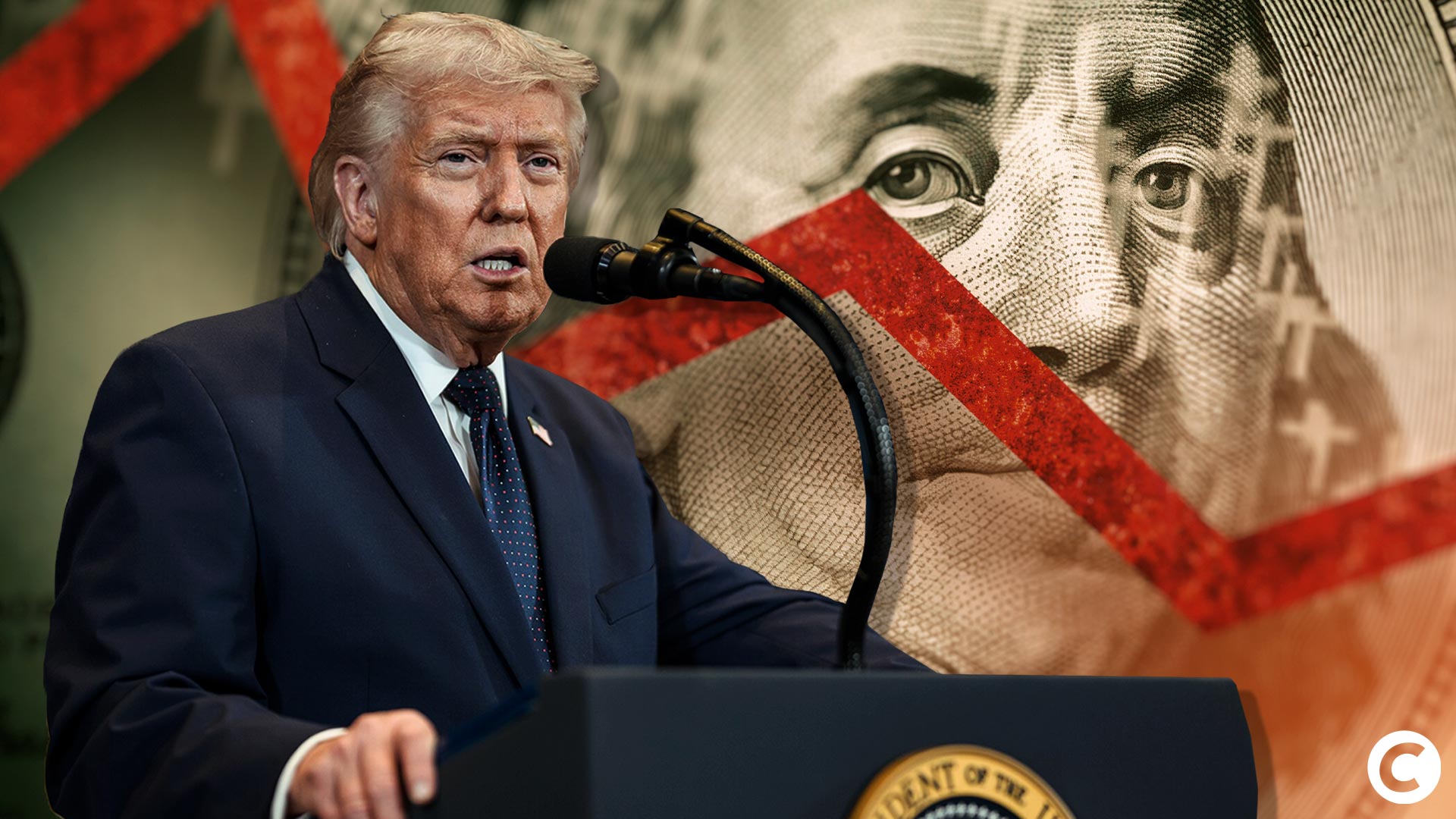
A US Army AH-64 Apache helicopter was patrolling over the Strait of Hormuz when it was shot down, its two crew members being rescued unharmed by an unmanned naval drone after the aircraft crashed off the coast of Oman. A surface drone from Task Force 59 located and recovered the soldiers, in what constitutes the first rescue operation of this type by autonomous maritime means. On Tuesday afternoon, Trump confirmed the incident on Truth Social:
“I have just been informed by our Grand Army that last night the Iranians shot down one of our highly sophisticated Apache helicopters while it was patrolling over the Strait of Hormuz. Two pilots were involved, both are safe. Nonetheless, the United States must, of necessity, respond to this attack. »
Two American officials said the Apache was hit by an Iranian drone. However, the intentional nature of the attack has not yet been formally established by the ongoing investigation.
An endless war in Iran for Donald Trump
This is where the sequence becomes particularly striking. Monday evening, leaving an NBA game in New York, Trump declared again that the two parties were in the ‘final stages’ of a ‘very, very good agreement’ which would halt Iran’s nuclear program and reopen the Strait of Hormuz «immediately upon signing.» Such an agreement could be signed “in two or three days,” he added.
Hours later, the Apache was at the bottom of the water and Trump promised a military response. Twelve hours of difference between diplomatic optimism and the threat of reprisals is the summary of this conflict from the start.
Bitcoin and the markets live!
The incident occurs in an already very tense context. It came after Israel and Iran exchanged their first direct strikes since April’s ceasefire, threatening a return to all-out war in the Middle East. The two adversaries then retreated slightly from the edge of the precipice, with a drop in oil and a rebound in markets as we were explaining it again this very afternoon. This new incident calls everything into question. The Strait of Hormuz, through which 20% of the world’s oil supplies pass, remains at the heart of the issues. Each escalation in the zone automatically increases crude oil and weighs on risky assets, including Bitcoin. THE stock market suffered a violent shock. The Nasdaq 100 lost nearly 4% during the day, according to The Kobeissi Letter, after Donald Trump’s statement. This sudden fall, combined with a strong risk-off movement, led to forced sales and mechanical selling pressure on the American indices, with a loss of capitalization estimated at more than $2,000 billion on the S&P 500 in the space of a few hours.
Billions of dollars come and go
However, there is no point in headlines about the drama and the big fall, as we can see in certain secondary media. This movement can be interpreted by several observers as a relatively healthy technical correction after a period of sharp rise in valuations, particularly in the artificial intelligence sector, where many analysts were already reporting levels of exuberance before the incident. On the energy front, oil lost ground this afternoon, despite a jump of almost 4% in the wake of Donald Trump’s statements, statements which have not yet been confirmed by other members of the administration. WTI fell back below $88 per barrel, while Brent moved around $91-92 after flirting with $90 during the session. Profit-taking dominated against a backdrop of hopes of de-escalation, even if volatility remains extreme in the Strait of Hormuz. At the end of the day, equity markets showed signs of stabilization after the brutal selling movement in the afternoon, with a technical rebound on technology stocks. However, volatility remains high and the geopolitical situation continues to weigh on sentiment. To be continued.