
For several years, regulators around the world have been trying to regulate cryptocurrencies. For example, in the United States, the IRS has categorized exchange platforms as brokers. In the same way as traditional finance intermediaries. Now it is the turn of decentralized finance (DeFi) to find itself in the sights of the regulator.
The key points of this article:
The IRS imposed new rules on DeFi protocols, requiring reporting of digital asset sales.
This regulation mainly targets front-end operators, with implementation planned for 2027.
IRS toughens law for DeFi protocols
L’Internal Revenue Service (IRS) is the United States tax agency, responsible for collecting federal taxes and enforcing tax laws. Thus, like the SEC, the IRS is also closely interested in cryptos. As mentioned in the introduction, in 2023, the IRS has categorized centralized exchange platforms, such as Coinbase or Kraken, as brokers in the USA. As a result, these platforms are subject to the same tax reporting and compliance requirements as their traditional finance counterpart. It is now DeFi’s turn to come under the microscope of the IRS. Thus, the American agency published new rules to regulate DeFi platforms.
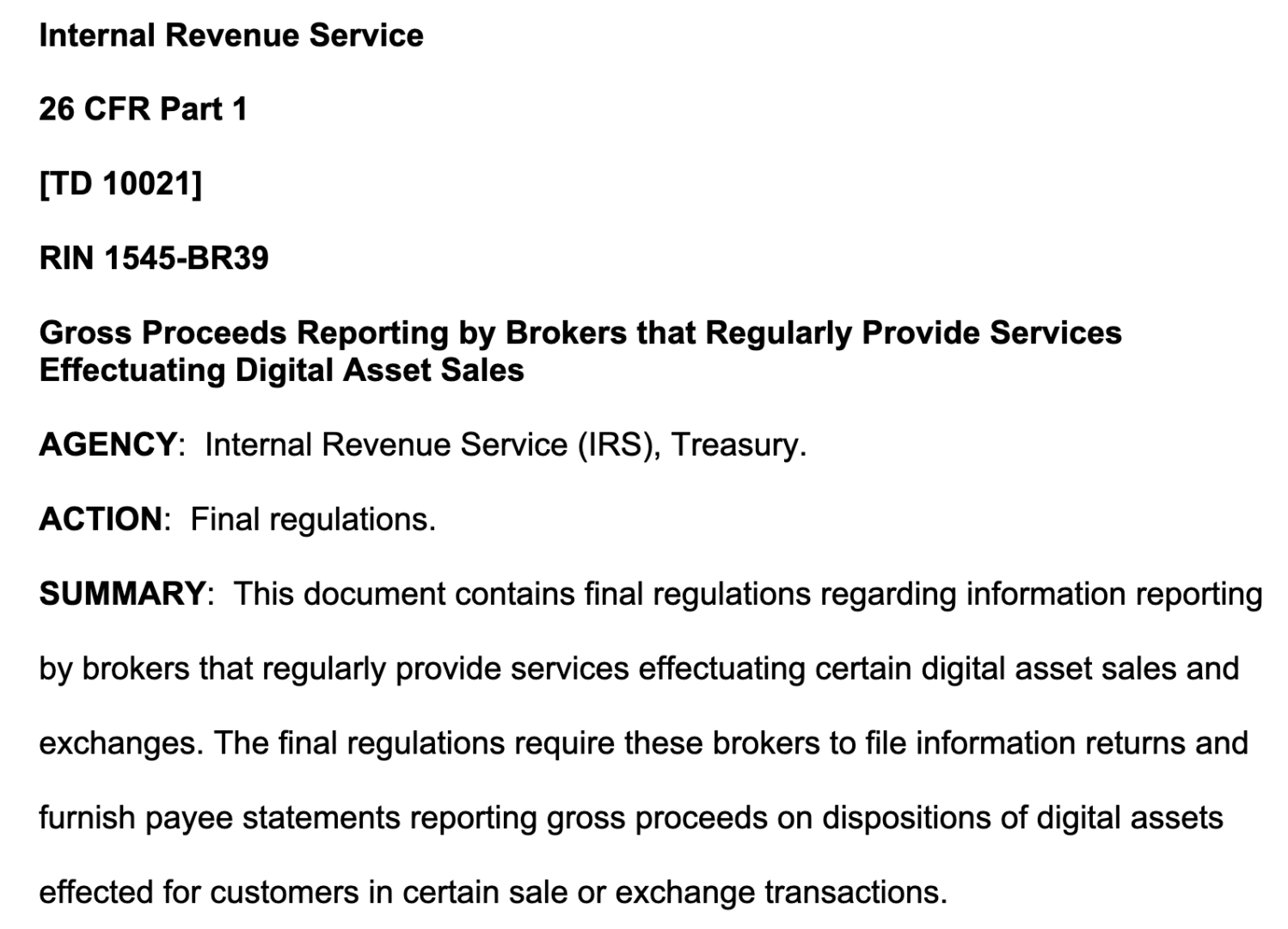
Due to this law, certain decentralized finance platforms will have to report gross proceeds from digital asset sales.
“The final regulations require these broker-dealers to file information statements and provide beneficiary statements showing the gross proceeds of digital asset dispositions made for customers in certain sale or exchange transactions. »
Consequently, these platforms will have to collect information from their users' trades and record them in form 1099. This document must contain the names, addresses as well as the gross proceeds of each user.
Who is affected?
Are all DeFi protocols affected by this law? Well not quite. Indeed, in its note, the IRS reveals that this regulation applies to “front-end operators”. As a reminder, the front-end is none other than the interface allowing interaction with smart contracts. As a result, this law mainly impacts companies that offer services via a DeFi protocol, rather than the DeFi protocols themselves. For example, this law could impact Uniswap Labs, the company behind the protocol and above all, the one which operates the front-end. Fortunately, these companies have a period of acclimation and preparation. In fact, the law will not come into force until January 1, 2027. Giving these companies time to adapt their operations. However, Donald Trump's recent government appointments could well change the situation. In fact, the pro-crypto nominations multiplysuggesting a relaxation of regulations.