
The night of February 2, 2026 will be remembered as the night when monetary policy definitively embraced blockchain. During announcements from the White House, including an executive order signing ceremony, the 47th president transformed his desk into a trading terminal. Between two flights of fancy about the greatness of America, Trump reiterated his ambition to make the United States the inviolable sanctuary of cryptocurrencies. The objective is clear. Merging crypto innovation, industrial power and aggressive geopolitics to establish the hegemony of the digital dollar (and Bitcoin). From the agreement with India to the appointment of the new head of the Fed, each pawn moved on the Trump chessboard seems to have been designed to boost the markets, while reminding us that, under his mandate, “money never sleeps”.
The key points of this article:
The night of February 2, 2026 marked a historic turning point where US monetary policy merged with blockchain under the Trump presidency. The announcement of a token distribution by Trump Media & Technology Group shook social media, offering exclusive rewards with no direct monetary value. A major economic deal with India has been reached, upending tariffs and promising a huge boost to the U.S. economy.
Trump, the “Great Partisan”: tokens, stablecoins and Crypto regulation
If some still doubted the president's commitment, recent developments around stablecoins and tokens should change their minds… or almost. Although the signing of a specific “Market Structure Bill” was not announced that day, Trump continues to push for clear regulation integrating cryptos into the mainstream financial system. It has already done so with past initiatives such as the GENIUS Act on stablecoins.
The DJT Airdrop: Building people’s loyalty through the Token
The announcement that shook social networks remains the initiative of Trump Media & Technology Group (DJT). The reference date (record date) has been set for February 2, 2026. In partnership with Crypto.com, the company will distribute digital tokens to shareholders owning at least one DJT share. Attention, no wild speculation here. These are non-transferable utility tokens, offering rewards on Truth Social, Truth+, Truth Predict or access to exclusive events. Crypto.com will take care of minting the tokens on the Cronos blockchain and their custody until distribution. This measure aims to reward shareholders without conferring equity or cash value, thus avoiding regulatory pitfalls.
The shadow of Abu Dhabi
Behind the scenes, the sector is buzzing about Abu Dhabi's $500 million investment (via Aryam Investment, linked to Sheikh Tahnoon bin Zayed Al Nahyan) in World Liberty Financial. As a reminder, WLFi is the crypto entity linked to the Trump family. This deal, concluded for 49% of the capital just before Trump's inauguration in January 2025, strengthens the institutional credibility of the pro-Trump ecosystem, but also weighs, and above all, on suspicions of market manipulation. Although the president claims he is not involved in operational details and is unaware, this massive flow of capital from the Gulf raises questions about potential conflicts of interest.
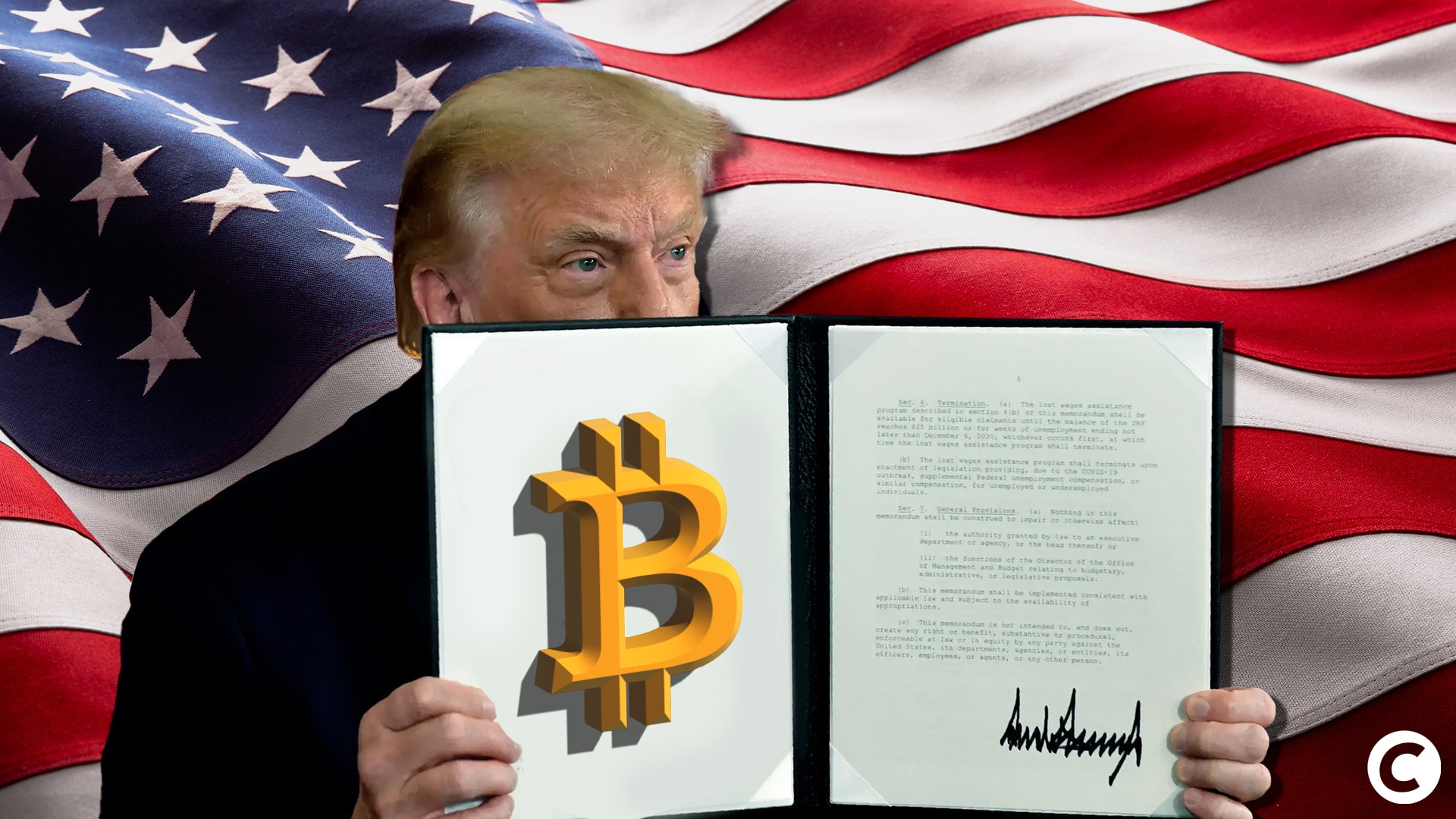
Macroeconomics: The Kevin Warsh earthquake and the “Project Vault”
At the same time, Bitcoin experienced a cold sweat this weekend. The reason? There nomination de Kevin Warsh to succeed Jerome Powell as head of the Fed next May. Known for being a “hawk” (supporter of a strict monetary policy against inflation, but pro-crypto), his arrival, announced on January 30, propelled the dollar upwards, briefly causing Bitcoin to slide towards $74,000 before a nervous recovery. Warsh, a former Fed governor under Bush, is praised for his handling of the 2008 crisis and his expertise in monetary policy. Trump also launched Project Vault, a strategic reserve of critical minerals (lithium, cobalt, rare earths) worth nearly $12 billion. Financed by a loan of $10 billion from EXIM Bank et 2 billions of dollars in private capitalthis stockpile aims to counter Chinese dominance and secure supply chains for batteries, electronics and advanced technologies.
The India Deal: Geopolitics and “Buy American”
The move of the week is undoubtedly the “deal” concluded after a call with Narendra Modi on February 2. Trump announced reducing tariffs on Indian products from 50% (including a punitive 25% surcharge linked to Russian oil) to 18%. The compensation is colossal: Stop Russian oil: India undertakes to stop its energy purchases from Moscow (and potentially from Venezuela in small quantities), a massive blow for financing the war in Ukraine. Modi has not explicitly confirmed this, but Trump says India will look to the United States and Venezuela to replace these imports. Note that nothing confirms this on the Indian side. $500 billion in purchases: New Delhi promises to buy half a trillion dollars worth of American technology, energy, coal, agriculture and other products, with non-tariff barriers reduced to zero on US goods. The timeline is not specified, but this represents a massive boost for the American economy. Although the agreement, symbolic and unilateral, does not directly mention cryptos, it stabilizes global markets and promotes a “Risk-On” environment. In India, despite a still heavy tax of 30% on crypto gains (plus 1% TDS), this rapprochement with Washington could force Modi to soften his position so as not to remain on the platform of the Web3 train. In a single day, Donald Trump proved that he wielded the customs lever as well as the wallet. Between pro-crypto regulation, geopolitical alliances and strategic reserves, the United States is drawing the contours of an economy where Bitcoin is no longer an enemy, but a strategic ally.
“I'm a big supporter of cryptos, and we've helped this industry more than anyone in history. » he said that night.