
Source: Photo: AI Bing Economic activity in the Eurozone stagnated in 2024, which eroded the persistent structural problems that hindered faster economic growth together with rising energy prices. Among the main factors of this development was the suppression of industrial production and the low rate of investment. Industrial production in November 2024 increased by 0.2% month-on-month, which signaled a slight recovery after previous declines. However, compared to the previous year, industrial production was down by 1.9%. This decline reflected continued weakness in the industrial sector, particularly in Germany, where industrial production fell 15% from its peak in 2017. Despite a weakening industrial sector, household consumption showed a slight improvement thanks to rising real incomes and stable employment. The low rate of unemployment in the Eurozone has a positive contribution to the impact of consumer spending. According to the January insight of CF analysts, the growth rate of the Eurozone economy will reach 1% this year, and will accelerate to 1.2% in the fifth year. The main driver of growth should be domestic demand supported by rising real incomes and deteriorating financial conditions. The percentage of certain imports will be uncertain, which probably will not contribute to economic growth, given the persistent problems with the competitiveness of European industry.
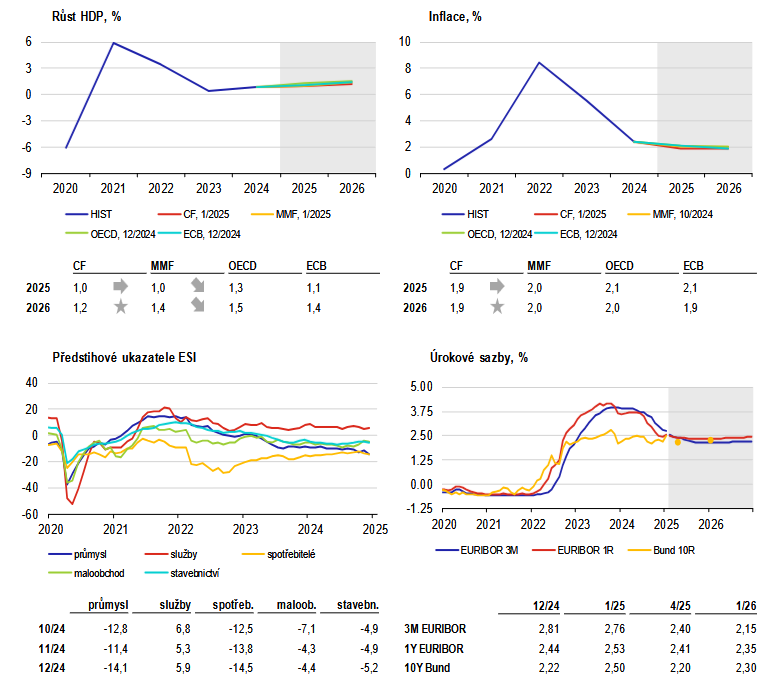
Consumer prices in the euro area rose by 2.4% year-on-year in 2024, and inflation reached the same growth rate in December. This represents an increase compared to November's inflation of around 2.2%. The main factor of this growth was the energy prices, which after some decline again recorded positive values, and the prices of services, which rose by 4% year-on-year. Core inflation remained stable at 2.7%. For this year and the fifth year, CF analysts estimate an average growth of consumer prices at a rate of 1.9%. The ECB responded to the slowing economy and giving way to inflation by gradually cutting annual rates, and in December, according to expectations, it cut the deposit rate to 3%. Thorn consensus assumes that the ECB will raise the deposit rate by another 100 basis points by the end of 2025.