
Starting to invest is a great step, but that very start often decides whether it will become a long-term habit. The biggest mistake of starting investors is that they make so-called mistakes, and then they get tired of relatively safe investments. Beginners usually don't make mistakes because they are inexperienced. Nobody told them in advance how investing works in the real world. As soon as the investor enters the market, he uses his own key to determine the risks and obligations that are logically connected, which the beginner is not immediately fully aware of. Investing is primarily a long-term process, which means that it is a slow process. The process, which is sometimes unpleasant at times, tests one's own psyche. The good news is that the most common pitfalls can be avoided by following simple rules, a sound system and relatively safe investments, which are tangible collateral. Emotions in investing must be under control An investor's worst enemy is himself, not the market. You will never influence the market, you have to adapt. However, you have enormous power over what you invest your hard-earned money into, and therefore it pays to think about your investment steps. Unfortunately, beginners often buy various risky and highly volatile assets at a time when everyone is talking about this great investment, so they feel that they will miss the train. The same goes for the investment slang FOMO (Fear of missing out). A beautiful example is the bitcoin market, where small and inexperienced investors tend to jump into the market at the time when prices are at their highest.
Long-term Bitcoin price chart. Source: Own work, data source: tradingview.com And then comes the opposite extreme: panic occurs during a downturn, which leads to panic selling at the worst possible moment. The result is a classic trap, which leads to buying high and selling cheap. Not because of a lack of information, but because of emotions, when the investor is afraid of himself. Therefore, a really simple framework will help to know why I invest, how long I want to invest and what I will do when the market suddenly falls. Anyone who has a plan to stick to has no reason to panic. Lack of diversification The second typical mistake of beginning investors is to bet on one card – perhaps one share title, one asset, a specific project. It doesn't make sense to the recruiter, because when I know, why not put more into it? However, the market can surprise even the best-quality assets, and the concentration of science increases the risk, because one bad event can cause a lot of damage. Therefore, the need to diversify may at first glance look like an all-too-distracted lesson, but on a practical level, it is the key to investing. Spreading the risk between several asset classes is absolutely essential for an investor. It is also important to spread out your purchases over time – regular investment and reinvestment of income will help you average purchase prices and thus diversify your investments over time.
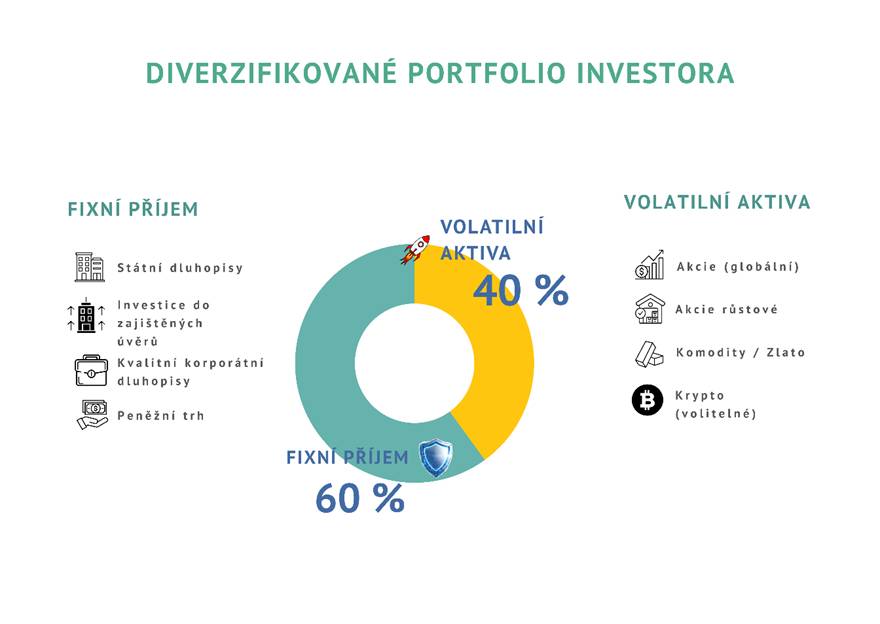
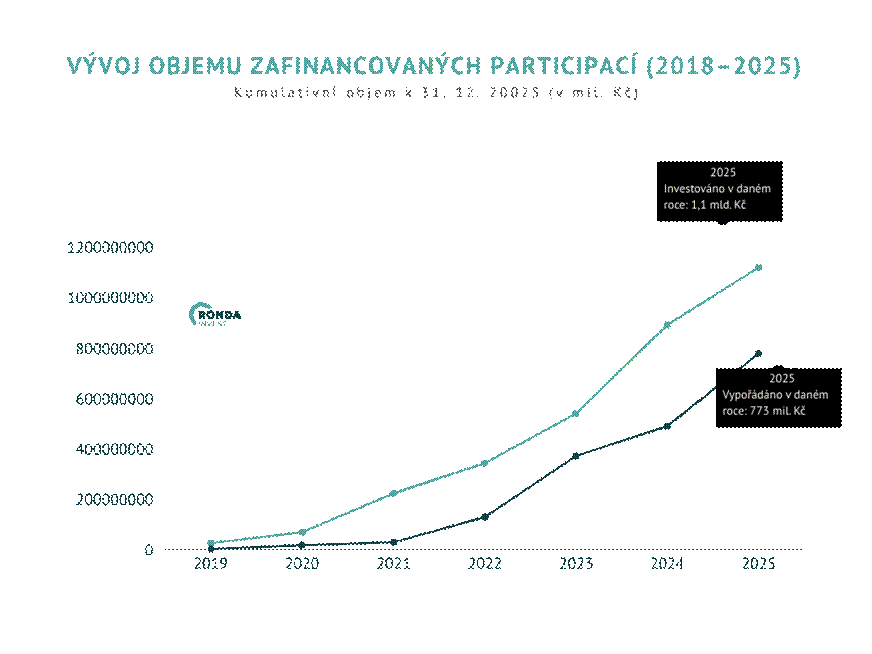
Therefore, on the Ronda Invest platform, the investor has the opportunity to purchase a range of loans secured by real estate, which are used to finance business and development projects. The investor receives payments regularly, so further investments can be planned and spread over time. Redundant systems As a practical supplement to diversification are the so-called redundant systems, which were brilliantly described by the mathematician and derivatives trader Nassim Taleb. It sounds so complicated at first glance, but it may surprise you that it is actually quite simple. Redundancy is a practical complement to diversification because it is a different type of problem. Diversification spreads the risk between several types of investments, but the redundant element is, for example, an insurance policy for moments when new investment opportunities arise in times of large market discounts due to panic, or your insurance policy for unpredictable life situations. Typically, this is hard liquidity in the form of cash on a joint account, which does not generate a large return, but it is another layer of protection for the investor above diversification. Redundancy in this context is therefore meant as a reserve for mountain times and potential opportunities. Underestimated risks Beginner investors often have a problem perceiving risk, because for them it is a very tangible abstract thing. Or it simplifies to «how much money can I lose''. In fact, risk is a much broader concept. Underestimation of risk leads to people investing their money based on expectations, which then remain unfulfilled. And here we put together what we said in the text of the poem. An investor must not only diversify, but create simultaneous reserves. Among the typical risks are volatility (fluctuating prices), liquidity (how quickly after the sale I will get the money), time (will I need the money before the maturity date), currency risk, annual risk and also pure human risk resulting from emotional trading The Ronda Invest platform offers a comprehensive solution, because investments in Credits are inherently not very volatile, the investor knows the maturity date, relatively high liquidity and no currency risk, because it is possible to invest in Czech crowns. And most importantly, the riskiness of the investment is secured by real estate, so they are relatively safe, due to the fact that real estate is a long-term stable market. Investors' trust is also confirmed by the continuous growth of the platform in terms of the volume of financed investments and participations, when it reached around CZK 1.1 billion at the end of 2025.
Kurzy.cz editor's note: Articles not authored by Kurzy.cz do not express the opinion of the editor or operator of the Kurzy.cz portal. If you use the information provided in the links as investment recommendations or advice, you do so at your own risk and expense.