
Fake platforms and real scams. The digital finance sector in India is going through a period of heightened vigilance faced with the proliferation of sophisticated cyberattacks. Recently, the CoinDCX company was the subject of a complaint (FIR) targeting its co-founders, a procedure that management describes as a “malicious maneuver based on false allegations”. This situation highlights a strategy of identity theft fraud, where malicious actors pose as crypto platform executives in order to embezzle funds. Preliminary investigations suggest that these impostors trick users into transferring assets or cash to third-party accounts that have no structural connection to the official entity.
The key points of this article:The crypto sector in India is going through a period of increased vigilance in the face of a worrying increase in sophisticated cyberattacks.
CoinDCX has reported more than 1,212 fraudulent websites, highlighting the scale of impersonation fraud aimed at deceiving investors.
A surge in fraudulent crypto platforms and fake sites
The fight againstusurpation branding now poses a major challenge to the integrity of digital financial ecosystems. Between April 2024 and early January 2026, CoinDCX indicates having identified and reported more than 1 212 sites web fraudulent imitating its official interface. These mirror portals aim to deceive investor vigilance to collect data sensitive or intercept deposits. Furthermore, the company actively collaborates with law enforcement authorities to dismantle these digital counterfeiting networks that harm overall user trust. This proliferation of domains malicious is part of a broader trend of cyberfraude affecting payment and asset storage infrastructures. In addition to fake sites, social networks often serve as vectors for disinformation campaigns or false technical support. Companies in the sector are therefore strengthening their protocols communication to warn the public that fund transfers should never be made to personal accounts or unverified third-party entities. There transparency on these incidents helps raise users' awareness of increasingly complex social engineering methods.
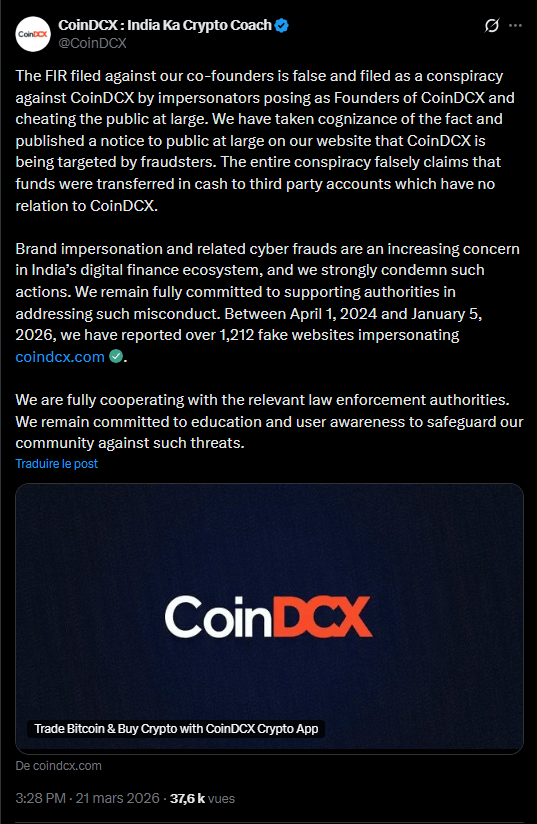 CoinDCX officials denounce fraud surrounding the crypto exchange – Source: Compte
Judicial cooperation and user awareness issues
Faced with these menacesthe institutional response is structured around technical cooperation with the services fighting against cybercrime. The objective is to identifier the actual beneficiaries of the third-party accounts used during cheats by usurpation. At the same time, platforms are investing in education programs to help customers distinguish communication channels official phishing attempts. The implementation of multi-factor verification systems and the certification of domain names are becoming essential standards to limit the impact of these activities. illicit. Asset protection is based on vigilance shared between service providers and their customers. Bien que les infrastructures de sécurité évoluent de manière notable, l'erreur humaine reste le principal levier exploité par les fraudeurs. Consequently, the regular publication of notices of security and the systematic reporting of attempts toscam contribute to cleaning up the transactional environment. The Indian authorities, for their part, are adapting the legislative framework to more effectively prosecute the authors of these scams digital technologies that exploit the notoriety of established brands to rob the public. The challenges posed by identity theft reflect the risks inherent in the rapid digitalization of financial services. The resolution of the CoinDCX case will likely serve as a precedent for handling liability in cases of external fraud involving thebranding of technology company leaders.