
A man who embodied the stability of central banks is passing away at a time when part of the world is trying to do without them. Alan Greenspan, chairman of the US Federal Reserve from 1987 to 2006, died this week, June 22, 2026 at the age of 100 from complications of Parkinson’s disease. For nearly twenty years, he embodied a certain idea of monetary policy: that of an era of stable growth and controlled inflation, which was called the “Great Moderation”. His death comes at a time when a growing number of investors and citizens are questioning the very model of central banks, and are looking towards Bitcoin as an alternative.
The key points of this article:
Alan Greenspan, the iconic former chairman of the US Federal Reserve, has died at age 100, leaving behind a controversial legacy. His death comes as the financial world questions the model of central banks in favor of alternatives like Bitcoin.
The Great Moderation: triumph and illusions
Under the Greenspan presidencythe United States has enjoyed a long period of economic growth, low inflation, and apparent financial stability. The Fed intervened decisively during crises (1987 crash, LTCM, etc.), earning it the nickname « Maestro ».
However, this period was also marked by the accumulation of imbalances: internet bubble, then real estate bubble. Greenspan himself later admitted a “flaw” in his vision of self-regulating markets, particularly after the 2008 crisisthe same crisis that gave the impetus for the creation of Bitcoin to Satoshi Nakamoto. The Great Moderation was therefore not only a period of stability: it was also a period when risks were underestimated and where abundant monetary creation prepared for future crises.
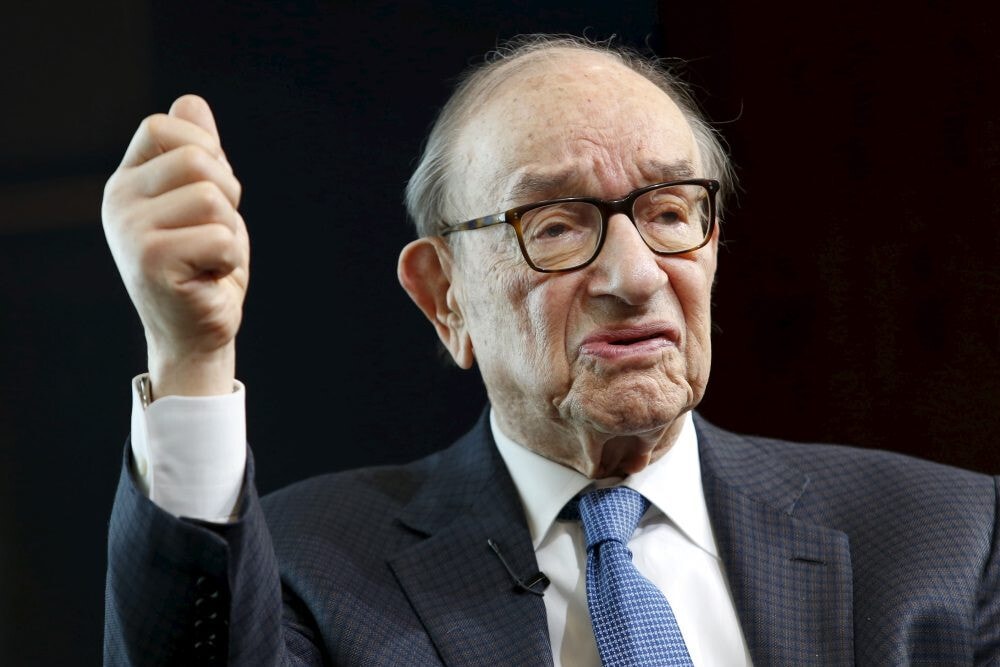 Former Federal Reserve Chairman Alan Greenspan speaks at a Brookings Institution forum on “Achieving Strong Economic Growth” in Washington, April 8, 2015 – Credit: Reuters
Bitcoin facing the legacy of central banks
Bitcoin was born in 2009, directly in response to the 2008 financial crisis and the quantitative easing policies that followed. Its value proposition is based precisely on what Greenspan and the central banks embodied: a currency decorrelated from the discretionary decisions of a central institution. While Greenspan defended an active monetary policy to smooth economic cycles, Bitcoin offers a predictable monetary system, with a fixed supply and immutable rules. There Greenspan’s death therefore symbolizes the end of an era. The man who led the Fed during its most prosperous post-war period is passing away as more and more institutional investors and governments begin to seriously consider Bitcoin as an alternative store of value.
A transition still unfinished
However, the Bitcoin has not yet supplanted the existing system. Most economies remain anchored to the model of central banks and fiat currencies. Bitcoin ETFs and adoption by some companies or governments remain marginal compared to the size of traditional markets. The disappearance of Greenspan, however, invites a broader reflection: the apparent stability of the decades 1990-2000 rested on fragile foundations. Bitcoin, with its own volatilities and adoption challenges, offers a radical response to these fragilities.